The Importance of Inclusion
Business Badgers value inclusive environments at every stage in their careers

At the Wisconsin School of Business, cultivating an equitable, diverse, and inclusive environment is a priority—one that we’ve identified in our strategic plan, Roadmap 2025. We know that our culture defines who we are, what we do, how we grow, and why we succeed. We seek to grow the demographic diversity of our students, faculty, and staff, while celebrating diversity of thought and perspectives in the classroom and workplace.
Understanding and advancing diversity and inclusion is a lifelong journey, with each individual at a different juncture in that journey. The challenge of building and sustaining an inclusive environment is shared by every member of the WSB learning community.
We asked three WSB community members to weigh in on this important topic. Together—whether as a student, as an alum, or as dean—we all act as equal partners in learning.
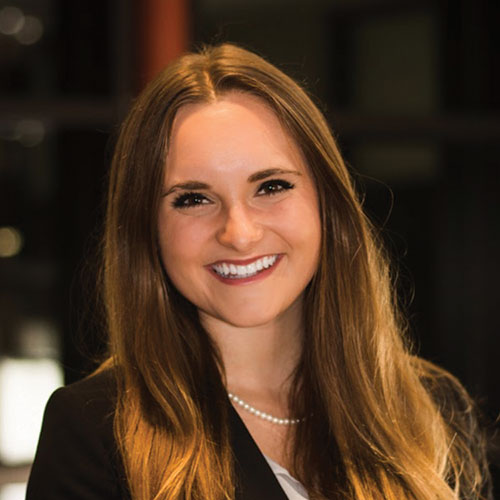
Lauren Bayer (BBA ’20)
Marketing and International Business Major
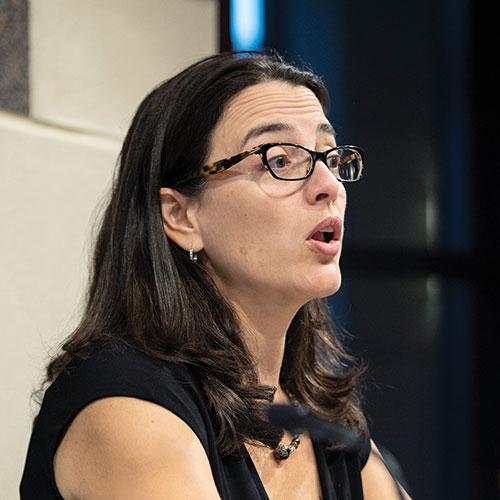
Nízida Arriaga (MBA ’91)
Manager of Fixed Income, Wespath Benefits & Investments
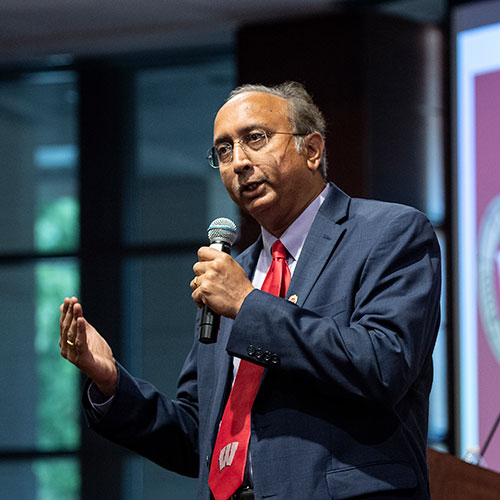
Vallabh Sambamurthy
Albert O. Nicholas Dean, Wisconsin School of Business
Q: Why is an inclusive environment important to you?
As a student: “Inclusion is a moral imperative. I have friends who need to remind themselves that they have a right to take up space, and peers who have yet to realize they have that right.
From a student perspective, learning can’t happen when everyone in the room doesn’t feel empowered to bring their whole selves. I want—for my peers and for myself—a learning environment where everyone is able to bring their full self. Simply being present doesn’t ensure someone has a voice that’s being heard, and that’s why actual inclusion is so important.”
— Lauren Bayer
As a business professional: “As businesspeople, we are driven by a job well done and delivering for our clients and stakeholders. The best environments to drive good results like that are inclusive environments—those with a culture that seeks different points of view, welcomes new ideas, empowers people, and recognizes the value of diverse perspectives. An inclusive environment is important for me not only because it allows for better results, but also because it is more interesting, and it is the right thing to do.”
— Nízida Arriaga
As the dean: “At WSB, we are not just teaching our students knowledge, we are also nurturing in them behaviors, attitudes, values, and beliefs. Inclusive thinking is an important mindset for us to encourage because it helps build a school and a workplace where people feel welcome, safe, and respected.
Much of a business school education centers on conversations between students, faculty, and staff—people who come from all different backgrounds and value different elements of their work. Having an inclusive mindset is important to those conversations, because that’s how you make every person feel valued and how you expand your own horizons.”
— Vallabh Sambamurthy
Q: How do you contribute to creating a culture of inclusion?
As a student: “I believe the best way to foster a culture of inclusion is to gain a deeper understanding of what it actually means. In the student organization I am a part of, Alpha Kappa Psi, I helped pass a bylaw adding membership requirements that led to increased learning opportunities about topics relating to diversity and inclusion.
Now, I am able to empower myself and others to better tackle the topics of diversity and inclusion by learning about and engaging with these lessons through workshops, roundtable discussions, lectures, and other immersive experiences.”
— Lauren Bayer
As a business professional: “We can provide training and hold managers accountable, but sincere, real inclusion is much more than that. For me, an inclusive environment is one that is open to the most qualified, creative, and innovative people, no matter their external markers or our preconceived notions. It is one that understands that differences are what make a group stronger and offer opportunities based on skill, not perceived externalities.
Inclusiveness requires respect and an open mind to listen closely to others. At times all it takes to start the conversation is to say ‘hello.’”
— Nízida Arriaga
As the dean: “Responsibility to promote an inclusive culture begins with me, both as a leader and as an individual. Not only do I believe in being inclusive, I have to practice it before I can preach it. An inclusive leader can build trust and authenticity.
As dean, I am surrounded by a lot of smart, dedicated, passionate people—I want to make sure they feel valued and that their opinions are welcome. Building an inclusive culture can help everyone in the School grow, adapt, and respond to change with open minds.”
— Vallabh Sambamurthy